Newsletter

Adventures in Research: Issue 10

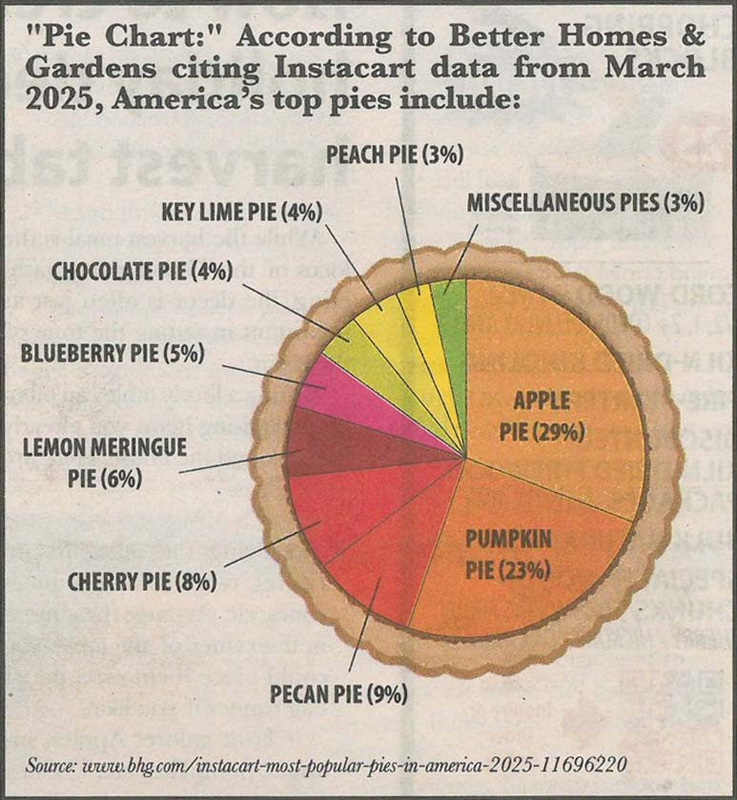
‘Tis the season for “best of” lists, new year predictions, and lots of yummy food, especially in the dessert category, which is why this “pie” chart caught my attention.

I’ve always believed a pie chart should only be used for two categories—three, max. But if the chart is literally about pies, I’ll make an exception. No researcher can be expected to resist that visual pun.

Of course, I’m curious about the “miscellaneous pies” category. What pie flavors are people eating that we don’t know about? Coconut Cream Pie (like Mary Ann made on Gilligan’s Island)? Shoofly Pie, an Amish/Pennsylvania Dutch classic? Dare I mention the pie made famous in The Help?

While we ponder the possibilities, let’s get to our latest issue of “Adventures in Research.”

—Alicia

Reflections on the state of program evaluation

I worry at times that we’re slipping into a space where the quality of evaluations just isn’t where it should be. In a broader environment that sometimes devalues research, that’s risky—and not just for individual projects, but for the credibility of our entire field. We have to make sure evaluations are rigorous, well-documented, and transparent enough to withstand peer scrutiny.

It’s a tricky balance, though. Programs often just want a short, accessible impact report that helps them with external case-making and internal decision-making. That’s why, at LRA, we always generate a brief, visually engaging impact report as well as a longer, more detailed report that fully documents our methods and analyses. It’s our way of ensuring clarity and credibility.

Remember, randomized controlled trials are great, but they’re not the only way to validate impact.

We were thrilled to read the results of a four-year randomized controlled trial (RCT) from Big Brothers Big Sisters of America (BBBS) and Arnold Ventures, showing that high-quality mentoring can reduce youth delinquency and substance use.

The rigor of this study—and its compelling findings—will not only strengthen BBBS’s evidence base, but also help build momentum around the power and potential of youth development programs more broadly.

That said, it’s worth remembering that for 90% of youth development programs, a randomized controlled trial isn’t necessary (or even appropriate) to demonstrate impact.

So feel free to take joy in these results, but don’t panic! Your program doesn’t need an RCT to demonstrate its value.

CHECK OUT THE STORY
Social media: good or bad for teens?

As a youth development researcher and the parent of two teens (and one aspiring teen), social media is a constant topic. I keep wanting to talk really clearly and decisively about the latest research surrounding social media and kids.

But it’s truly impossible (and irresponsible) to make a single, succinct statement about the impact of social media on youth development. Why? The story is so nuanced (and I LOVE nuance!), and we have so much more to learn (and I LOVE thinking creatively about research).

So, I’m going to put my perspective out there in all its messiness:

  • There are some young people for whom the impact of social media is devastating.
  • There are some young people for whom social media is a lifeline and a positive force for good.
  • There are many young people for whom social media is a regular part of life that doesn’t particularly sway things in one direction or the other.

I’m ready to stop arguing about whether social media is “good” or “bad.” I’m ready for research that helps us dissect this nuance and support young people exactly where they are.

Lynch Research Associates hits the road…

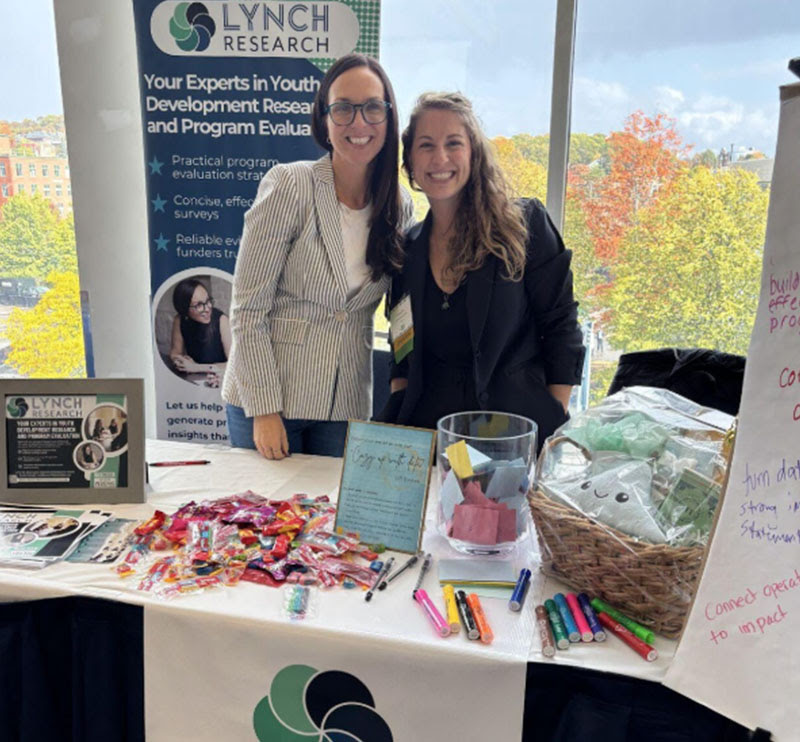
We had an absolute blast at the Mass Nonprofit Network Annual Conference on October 22 in Worcester. It was our first time hosting an exhibitor table, and we’ll admit—we were a little nervous.

But the people we met were incredible—warm, passionate, and so deeply committed to strengthening their communities. The conversations were energizing and made our whole day.

So, 2026 is almost here. Are you ready?

If you’ve been thinking about a research project for 2026 (or beyond), get in touch. We can help you make sense of that hazy idea floating around in your head and outline practical next steps. My team and I are always happy to talk.

Wishing you a joyful holiday season and a wonderful new year.

Talk to you again in 2026!

Best,
The Team at Lynch Research Associates